Sewzy
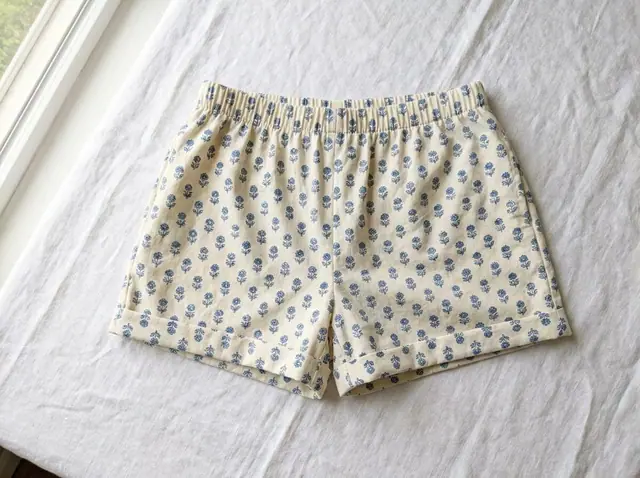
To hem pants, try them on with the shoes you will wear, fold the leg up to the right length and pin it. Take them off, press the new fold, trim the extra, turn the raw edge under and sew the hem down with a machine topstitch or a hand blind stitch. Pressing is what makes the hem look neat.
TL;DR
- Measure with the pants on and the shoes you will wear. Pin the length, then take them off to sew.
- A hem allowance of about 1 in to 1½ in is common. Trim the leg to leave exactly that much, then fold twice.
- By machine, topstitch close to the upper folded edge. By hand, use a blind stitch with small stitches, about ¼ in apart.
- Press every fold before you sew. A press cloth stops shiny marks on the fabric.
- Sewing your own pants? The Sewzy patterns build the hem in: 1 in on the Sleep Shorts and 1¼ in on the Barrel Pants.
What do you need to hem pants?
- Pins or clips, a measuring tape or ruler, and fabric chalk or a washable marker.
- An iron and ironing board. A press cloth is helpful on dark or delicate fabrics.
- Thread that matches the fabric. For hand hemming, a fine sharp needle.
- Sharp scissors. See the sewing tools for beginners list if you are building a kit.
How do you measure the length?
- Wash and dry the pants first. Do it the way you will wash them later. The fabric shrinks before you measure, not after.
- Try them on with your shoes. Wear the shoes you will use most with them. Flats and heels need different lengths.
- Fold the leg up and pin. Stand straight and fold each leg up to the length you want. Pins go through the fold, not along the fabric.
- Check both legs. Look in a mirror, then measure the inseam from the crotch to the fold on each leg. They must match.
How do you hem pants with a sewing machine?
- Take the pants off and press the fold. Lay a leg flat and press along the pinned fold.
- Mark and trim. Decide your hem allowance, about 1 in to 1½ in. Measure that distance below the fold, mark it and cut off the rest.
- Finish the raw edge. Zigzag or serge it so it cannot fray. On a soft fabric you can skip this and fold the edge under ¼ in instead.
- Fold the hem up and press. Pin or clip it in place all the way round.
- Topstitch. Work from the inside of the leg, with the hem against the machine bed. Sew close to the upper folded edge of the hem allowance. Overlap a few stitches at the start and the end.
- Press again. Press the finished hem flat. This sets the stitches.
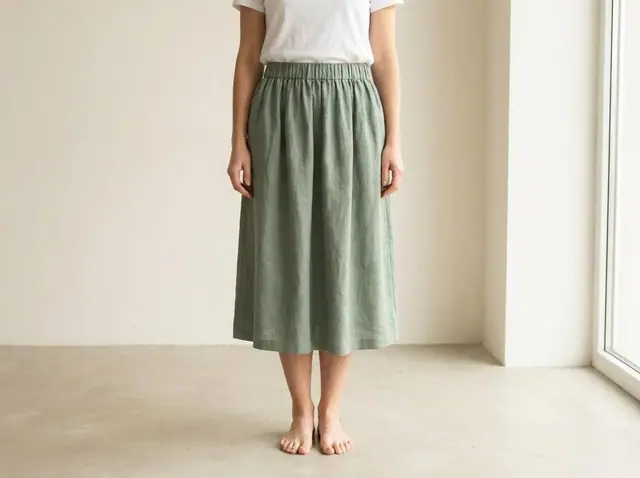
On a pattern with the hem already measured, the steps are the same, only shorter. The Sewzy Sleep Shorts hem is two folds of ½ in, pressed and topstitched. The Elastic-Waist Skirt presses under ⅜ in first, then folds on the hem line (1¼ in) and topstitches.
How do you hem pants by hand?
A hand hem is nearly invisible and is the right choice for dress pants, thick denim or any fabric where a visible line would look wrong.
- Prepare the hem as above. Measure, trim, finish the raw edge and press the fold.
- Thread a fine needle. Use thread that matches the pants, knotted at one end.
- Fold the finished edge back. Fold it back slightly, so you can see the inside of the pant leg and the edge.
- Take a tiny stitch. Catch just a thread or two of the pant leg, then slip the needle through the fold of the hem for about ¼ in.
- Repeat. Keep stitches small and the thread loose. Pulling too tight puckers the leg and shows from the outside.
- Press lightly. Use a press cloth so you do not leave a shiny line.
Which method should you choose?
| Method | Looks like | Best for |
|---|---|---|
| Machine topstitch | One visible line of stitching | Casual pants, shorts, sleepwear, kids' clothes |
| Hand blind stitch | Almost invisible | Dress pants, wool, silky or fine fabrics |
Common mistakes to avoid
- Hemming before washing. If the pants shrink afterward, they end up too short.
- Measuring without shoes. The length is wrong the moment you put the shoes on.
- Cutting before pinning both legs. Make sure they match first.
- Skipping the press. An unpressed hem rolls and looks homemade in the wrong way.
- Pulling hand stitches tight. It puckers the leg. Keep them relaxed.
- Pressing without a cloth on dark or synthetic fabric. You can leave a shiny mark.
Sewing pants instead of shortening them?
The free Sleep Shorts pattern is a good first pair, and the Elastic-Waist Skirt teaches the same double-fold hem. The elastic waistband guide covers the top edge, and how to read a sewing pattern explains the hem lines on the pieces. The Wrap Pants are a next step once you are comfortable.
What about jeans and thick fabric?
Thick seams at the side and inseam are hard for a machine to sew through. Slow down at each seam, hold the fabric level so the foot does not tip, and use a heavier needle such as a jeans needle. The needle and thread guide lists the sizes. Hammer the thick seam lightly with a mallet or the back of a spoon first to flatten it.
Sources
Preshrinking means washing and drying fabric before cutting; see the glossary in the Purdue Extension 4-H sewing helper's guide. A press cloth between the iron and fabric helps prevent shine and press marks, per Utah State University Extension, Basic Sewing Supplies. Hem allowances for the patterns come from the Sewzy catalog.
 How to sew an envelope pillow cover (no zipper)5 min read
 How to sew a straight line and smooth curves6 min read
 Thread bunching under fabric? Fix a bird's nest6 min read
 How to sew on a button by hand, and make a buttonhole6 min read