Sewzy
Sewzy
Good first projects have straight seams, few pieces and a fabric that does not stretch. This list puts ten of them in order, from a 15-minute scrunchie to a pair of sleep shorts, with the skill each one teaches.
What you need to start
You do not need a big studio. A basic machine, sharp scissors, pins or clips, a seam ripper, a tape measure and an iron are enough. Add cotton thread and a few meters of plain cotton fabric. Quilting cotton is a friendly choice: it does not stretch, it does not slide, and it presses crisply.
Always pre-wash your fabric, press it flat and cut along a straight grain. Those three habits make the biggest difference to how a project turns out.
Ten easy projects, in a good order
1. Scrunchie
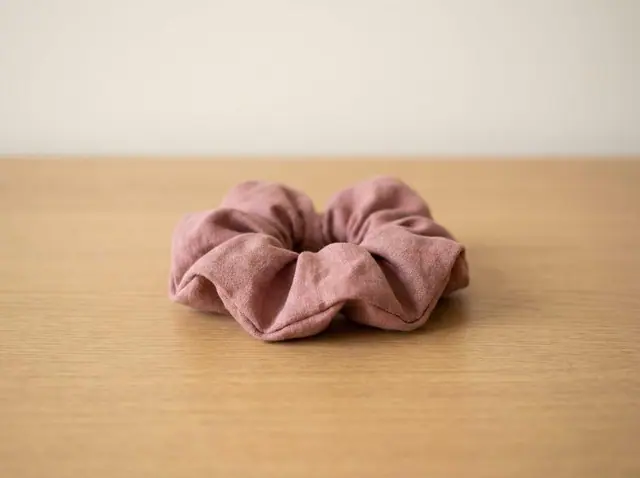
A scrunchie is a tube with elastic inside. You will practice sewing a long seam, turning a tube and closing a small gap. The Scrunchie takes about fifteen minutes, so you can try it again straight away.
2. Elastic bookmark
Very small and quick. It teaches you to sew a neat edge on a tiny piece. See the Elastic Bookmark.
3. Drawstring bag
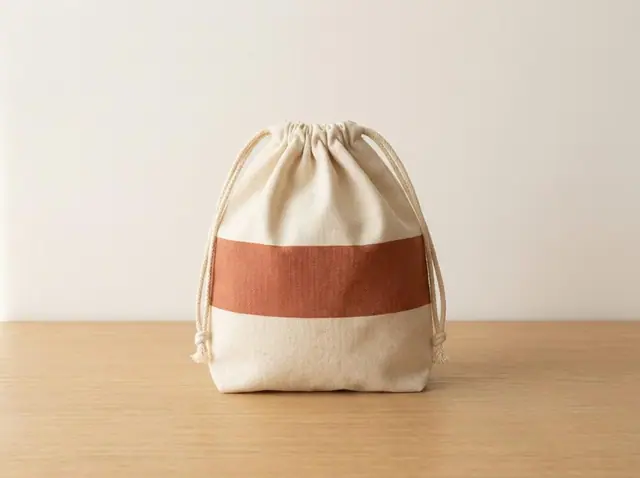
Great for learning casings: a folded channel that holds a cord. The Drawstring Bag is useful for shoes, toys or gifts.
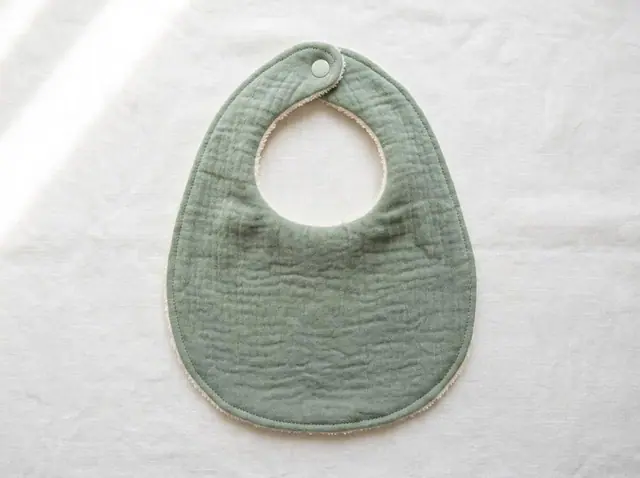
4. Baby bib
Curves for the neckline, plus a finished edge. The Baby Bib is a good gift and a nice step up.
5. Envelope cushion
No zipper needed. Two back panels overlap, and the front sits on top. The Envelope Cushion teaches hems and sewing square corners.
6. Zipper pouch
Zippers seem scary but are just straight lines near a metal or plastic edge. Use a zipper foot and go slowly with the Zipper Pouch.
7. Bowl cozy
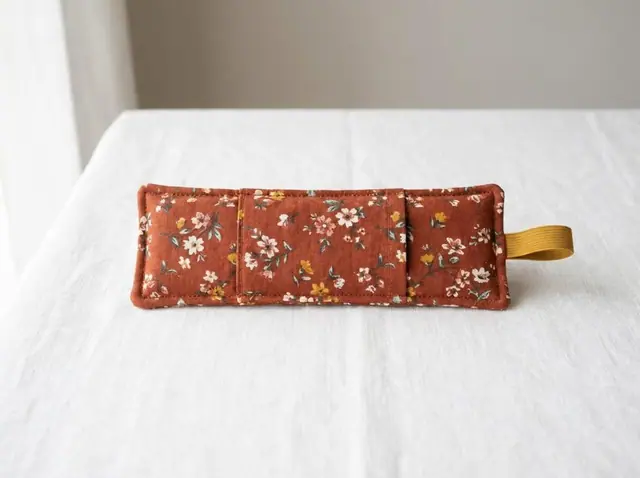
A quilted shape that teaches layers. The Bowl Cozy is handy and makes a good gift.
8. Tote bag
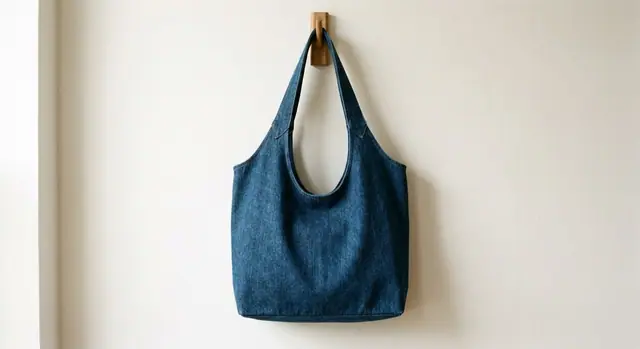
Straps, a lining and a boxed bottom. The Boxed Tote Bag is a confidence builder.
9. Elastic-waist skirt
Your first garment. No zipper, no buttons. The Elastic-Waist Skirt teaches fit and a waistband casing.
10. Sleep shorts
Another elastic-waist project, with legs to sew. See Sleep Shorts.
Skills you pick up along the way
- Seam allowance: sewing the same distance from the edge each time.
- Backstitching: locking the start and end of each seam.
- Pressing: pressing as you go gives neat corners.
- Turning corners: clip the corner of the seam allowance, then use a blunt tool to push out the point.
- Topstitching: sewing close to a finished edge.
Common beginner mistakes, and the fixes
Skipping the press. A crooked hem is usually a hem that was never pressed. Set the fold with the iron before you sew.
Cutting off the grain. Check that your pattern pieces sit straight with the fabric edge.
Wrong needle or dull needle. Change your needle at the start of each project. Use a universal needle for woven cotton.
Pulling the fabric. Let the machine feed it. Guide, do not drag.
Take it slowly
Sew a practice seam on a scrap before every new project. Test your tension, your stitch length and your presser foot. Two minutes on a scrap saves an afternoon with the seam ripper.
Make it with Sewzy
Thirteen Sewzy patterns are free, and most of the projects above are among them: see the free sewing patterns for beginners page for the full list. Every pattern comes in every size with a written step-by-step guide, and the AI sewing coach can explain a step if you get stuck. Download Sewzy on the App Store and begin with a Scrunchie or a Drawstring Bag.
FAQ
What is the easiest thing to sew for a beginner?
A scrunchie, a bookmark or a drawstring bag. They use straight seams and take under an hour.
What fabric should a beginner use?
Quilting cotton or another plain woven cotton. It does not stretch, it presses well and it is easy to cut.
Do I need a sewing machine to start?
A basic machine is the easiest way, but many small projects can be hand sewn. Machines make seams faster and stronger.
How long does it take to learn to sew?
Most people can finish a simple project in their first session. Skills build with each project, so keep going in small steps.
 What size sewing pattern do I need?6 min read
 How to find a sewing pattern from a photo5 min read