Sewzy
Sewzy
Here is the short answer: measure your bust, waist and hip, find those numbers on the pattern's body chart, and choose by the measurement that matters most for that garment. Your shop size has very little to do with it. The rest of this guide explains why, and what to do when your numbers land in two sizes.
Why your pattern size is not your shop size
Clothes in shops are sized by each brand in its own way, and the same label can mean very different measurements from one shop to the next. Sewing patterns go by a body chart instead. The chart is exact. It also means many people who wear a medium in shops find they are a large, or a small, on the pattern. Ignore the letter and trust the tape measure.
The three measurements, and how to take them
Wear thin clothes or underwear, stand naturally and ask someone to help if you can. Keep the tape level all the way round and snug, but do not pull it tight.
- Bust: around the fullest part of the chest, with the tape across the shoulder blades at the back.
- Waist: around your natural waist, the narrowest part. Bend to one side; the crease that forms is your waist.
- Hip: around the fullest part of the hips and seat. Look in a mirror from the side to find it; it is often lower than people think.
Write the three numbers down in inches or centimeters, whichever the pattern uses.
Body chart and finished measurements
A pattern usually gives two sets of numbers. The body measurements are you. The finished measurements are the garment. The gap between them is called ease, and it is what makes a loose top loose.
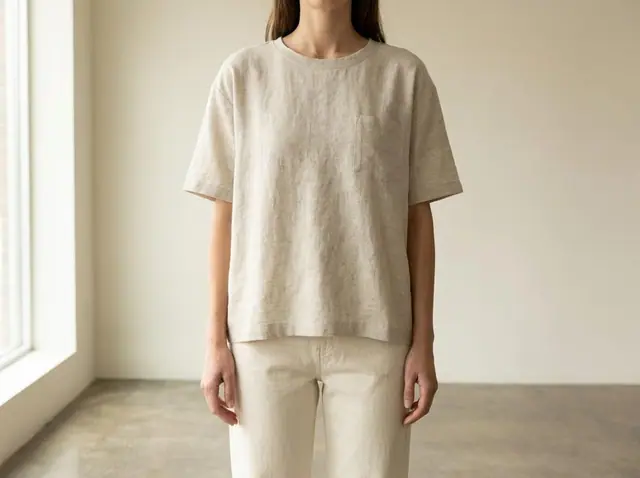
A real example: the free Boxy Tee in size M is for a 37 in bust, and the finished tee measures 47 in around. That is 10 in of ease, which is what gives it the relaxed, boxy shape. If you picked the size whose finished bust matched your body, you would land on XS or smaller and lose the boxy shape. Choose by the body column, not the finished column.
| Size | Body bust | Finished bust |
|---|---|---|
| XS | 32 in | 42 in |
| S | 34½ in | 44 in |
| M | 37 in | 47 in |
| L | 40 in | 50 in |
| XL | 44 in | 54 in |
| 2XL | 48 in | 58 in |
| 3XL | 52 in | 62 in |
Which measurement decides
For tops and dresses, choose by your bust. Shoulders and the chest are the hardest areas to change, and the bust measurement tracks them. For skirts and pants, choose by your hip. A waist is easy to take in or let out, and elastic waists forgive a lot; a hip that is too small is not fixable.
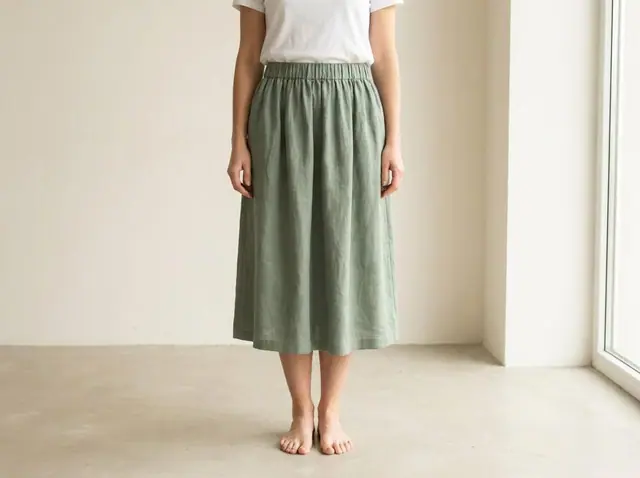
The Elastic-Waist Skirt is a good example: it is chosen by hip, and the skirt is 1.6 times your hip all round, so it is full but not bulky. Size M is for a 41 in hip.
When you are between sizes
Nobody matches a chart exactly. If your bust is a medium and your hip a large, you have two options:
- Pick by the deciding measurement (bust for tops, hip for bottoms) and adjust the rest.
- Blend: on the printed pattern, draw a smooth line from one size's cutting line at the bust to the other size's line at the hip. Patterns with all sizes nested on one sheet make this easy.
For loose, boxy styles, the smaller of two sizes is usually fine because there is so much ease. For fitted styles, go up and take it in.
Kids, hats and baby shoes
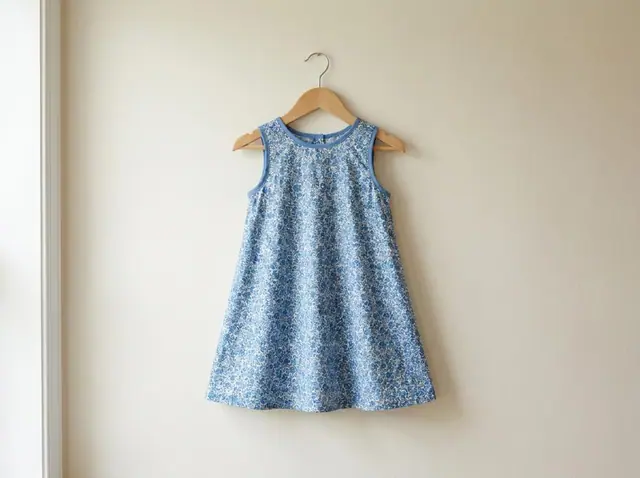
Children's patterns are labeled by age, but children are not all the same size at the same age. Choose by the chest measurement in the chart, then lengthen or shorten at the hem. The Girls A-Line Dress runs from 1 to 8 years and is chosen by chest.
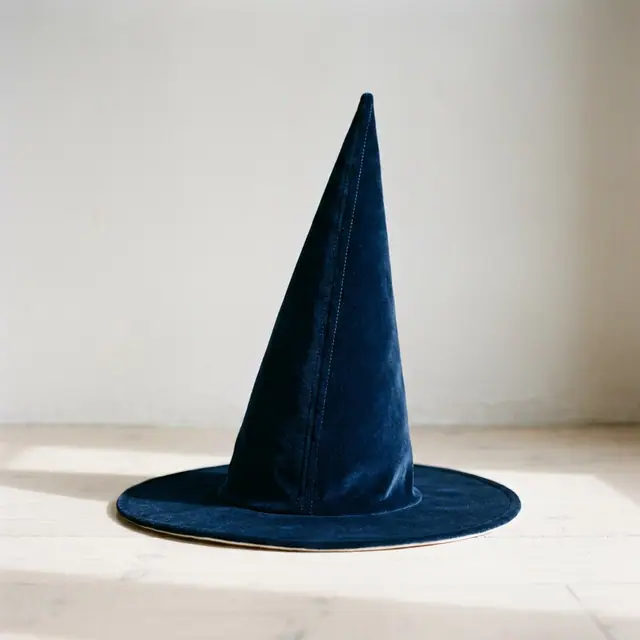
Hats go by head size: measure around the head where a hat sits, just above the ears. The Wizard Hat comes in 20.5, 22 and 23½ inch heads. Baby shoes go by foot length, heel to longest toe: the Baby Booties run from 3¾ in to 5¼ in.
Make it with Sewzy
Sewzy has a size finder: type in your bust, waist and hip once, and it gives your size on a standard commercial chart (a number such as 14 or 16) for tops and dresses and for skirts and pants. Sewzy's own clothing patterns are sized XS to 3XL, so compare your bust or hip with the size chart on the pattern before you cut. Every pattern includes all of its sizes, from XS to 3XL for the clothing. Download Sewzy on the App Store and try it on the free Boxy Tee.
FAQ
Should I buy my usual clothes size?
No. Pattern sizes are based on body measurements, and they rarely match shop sizes. Measure yourself and use the chart.
What if I am between two sizes?
For loose styles, take the smaller size; there is plenty of ease. For fitted styles, take the larger one. You can also blend: cut one size at the bust and another at the hip, drawing a smooth line between them.
Which measurement matters most?
Your bust for tops and dresses, your hip for skirts and pants. Those are the hardest places to alter.
Do kids' patterns go by age?
The label says an age, but choose by the measurement in the chart, usually chest for dresses. Then adjust the length at the hem.
 What is a PDF sewing pattern and how does it work?7 min read
 How to sew a scrunchie in 15 minutes (free pattern)5 min read
 How to find a sewing pattern from a photo5 min read
 Thanksgiving porch goose outfits: turkey, harvest and scarecrow looks to sew5 min read