Sewzy
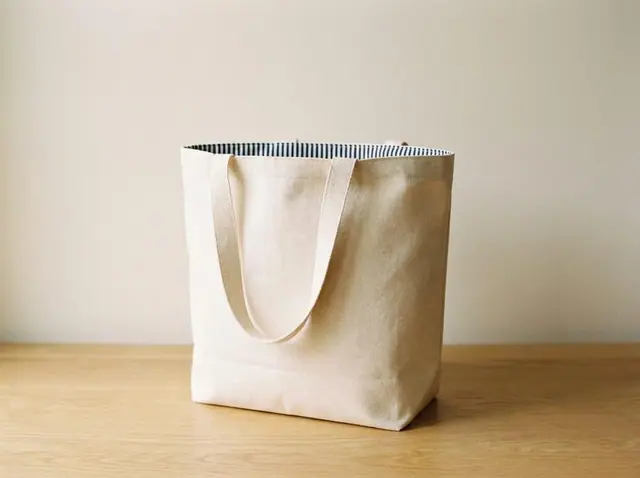
To topstitch, sew a visible line of stitching on the right side of the fabric, about ⅛ to ¼ in from a seam or fold, after pressing it flat. Use a longer stitch (about 3 to 3½ mm), a sharp needle, and the edge of your presser foot as a guide. Topstitching holds layers flat and gives bags, pockets and hems a clean, finished edge.
TL;DR
- Press first. Topstitching on a messy seam only locks the mess in place.
- Stitch length: about 3 to 3½ mm, longer than regular seams.
- Distance: edgestitch about ⅛ in from the edge, topstitch about ¼ in.
- Guide: line up the edge of your presser foot with the seam or fold.
- Needle: a fresh 90/14 for canvas, as in the Boxed Tote Bag pattern.
- Corners: stop with the needle down, lift the foot, pivot, lower the foot.
Sew the Boxed Tote Bag from this guide, step by step, in the Sewzy app
Pick your size, print it from your phone, and follow every step with a sewing coach beside you.


What is topstitching?
Topstitching is stitching you can see on the outside of a project. It has two jobs: it keeps a seam allowance or hem lying flat, and it decorates. Jeans pockets, tote straps and the rim of a pouch are all topstitched. If you are still working on straight lines, practice with how to sew a straight line and curves first.
What is the difference between edgestitch and topstitch?
| Edgestitch | Topstitch | |
|---|---|---|
| Distance from the edge | about ⅛ in | about ¼ in or more |
| Looks like | A thin line right at the fold | A visible border line |
| Typical use | Zipper tape, pocket edges, straps | Top of a bag, hem, brim |
The Sewzy patterns use both. The free Zipper Pouch topstitches ⅛ in next to the zipper, and the free Boxed Tote Bag topstitches ¼ in around the top.
What thread and needle should you use?
- Thread: regular all-purpose polyester works for most gifts. Use a heavier topstitching thread when you want the line to show. Test it on a scrap first.
- Needle: start with a new needle. A 90/14 jeans needle is what the tote bag pattern lists for canvas. A topstitch needle (90/14 or 100/16) has a larger eye and a deeper groove for thick topstitching thread.
- Stitch length: about 3 to 3½ mm. Short stitches look cramped on top and can pucker thick layers.
- Foot: a walking foot helps on thick layers, and an edgestitch foot has a metal guide to run along the seam.
How do you topstitch step by step?
- Sew the seam. Finish the seam, trim the corners and turn the piece right side out. Push the corners out with a blunt tool.
- Press. Roll the seam so it sits exactly on the edge. Press flat with steam. A good press does half the job.
- Set the machine. Choose a stitch of about 3 to 3½ mm. Test on a scrap made from the same layers.
- Find the guide. Move the needle position if your machine allows it. Otherwise line the edge of the foot, or the edgestitch foot's guide, along the fold.
- Start. Begin a few stitches from a corner, backstitch once, then sew forward. Watch the guide, not the needle.
- Pivot at corners. Stop with the needle down in the fabric, lift the presser foot, turn the piece, lower the foot and continue. For tight corners, count the stitches so both sides match.
- Finish. Overlap the first stitches by about ½ in, backstitch once, and trim the threads. For a very neat finish, pull the top thread through to the back with a hand needle and knot the ends.
Where do Sewzy patterns use topstitching?
- The Boxed Tote Bag (free, beginner, about 90 minutes) topstitches both long edges of the straps and the pocket, and finishes with a ¼ in line around the top.
- The Zipper Pouch (free, beginner, about 45 minutes) topstitches ⅛ in beside the zipper after pressing.
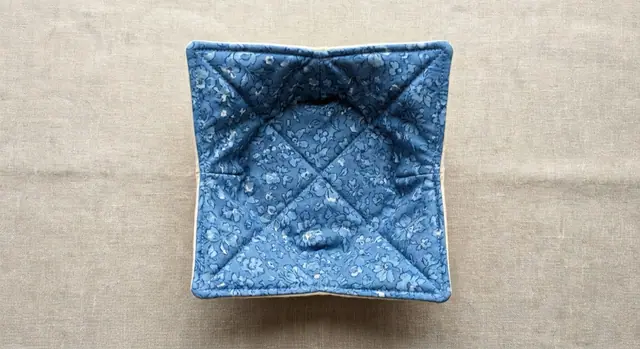
- The Bowl Cozy (free, beginner, about 60 minutes) ends with a topstitched rim.
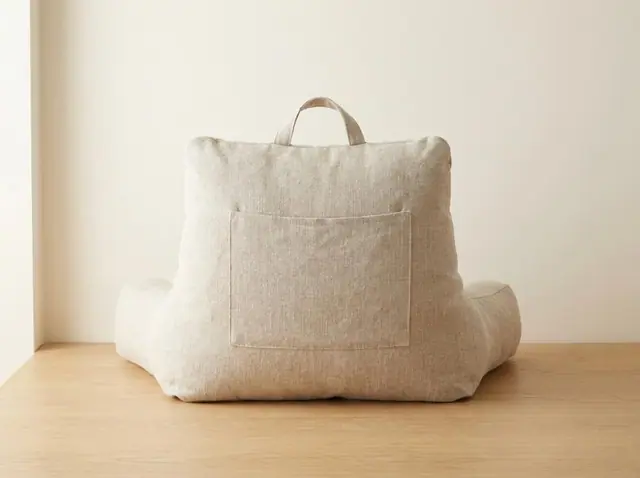
- The Reading Pillow (in the Sewzy app, beginner, about 45 minutes) topstitches the pocket hem and the handle, and suggests a second row at ⅛ in for a sharp look.
Try it on a small project first. A zipper pouch is a short project that also teaches pressing, as shown in how to sew a zipper pouch. If your stitches look uneven, check how to fix skipped stitches.
How do you topstitch curves and thick seams?
On a curve, shorten your stitch slightly and sew slowly, turning the fabric a little at a time so the distance from the edge stays the same. Do not push the fabric sideways. On thick seams, such as the top of a tote where straps and lining meet, sew at a slow, steady speed and use a walking foot so the layers move together. When the foot tips up at a bump, tuck a folded scrap of fabric or a hump-height shim under the back of the foot so it stays level, then sew over the hump.
What are the common topstitching mistakes?
- Skipping the press. A wavy edge gives a wavy line. Press and roll the seam first.
- Stitch too short. Short stitches bunch up on top. Lengthen the stitch.
- Watching the needle. Look at the guide and let the machine feed the fabric. Do not pull.
- Old or wrong needle. A dull or thin needle skips stitches on canvas and denim.
- No scrap test. Test on two layers of scrap so the thickness matches your project.
- Sewing too fast around corners. Slow down and use the handwheel for the last stitch before a pivot.
Once your lines are straight, try a second row of stitching ⅛ in from the first, or pick a bag such as the boxed tote where topstitching is the main feature.
 How to sew with minky without the mess (beginner guide)7 min read
 How to sew a ruched tote bag (3 sizes, 12 steps)7 min read