 Sewzy
Grainline is the direction of the threads in woven fabric. Lengthwise grain runs parallel to the selvage and stretches least, crosswise grain runs from selvage to selvage with a little give, and the true bias runs at 45 degrees and stretches the most. The grainline arrow on a pattern piece tells you which way to lay that piece on the fabric.
Get the pattern: Boxy Tee sewing pattern (free PDF), with every size and a step-by-step guide.
TL;DR
- Lengthwise grain is parallel to the selvage and is the most stable.
- Crosswise grain runs from selvage to selvage and has slight give.
- True bias is at 45 degrees and has the most stretch.
- Place the arrow so it is the same distance from the selvage at both ends.
- Cut off grain and legs twist and hems hang unevenly.
Sew the Boxy Tee from this guide, step by step, in the Sewzy app
Pick your size, print it from your phone, and follow every step with a sewing coach beside you.


What are the three grains of fabric?
Woven fabric is made from two sets of threads that cross each other. Where they run decides how the cloth behaves. The edge of the fabric that does not fray is called the selvage, and it is your starting reference.
| Grain | Direction | Stretch | Typical use |
|---|---|---|---|
| Lengthwise | Parallel to the selvage | Least | Most pattern pieces, pant legs, long panels |
| Crosswise | Selvage to selvage | Slight give | Some waistbands and cuffs |
| True bias | 45 degrees to the selvage | Most | Bias tape, drape, curved binding |
What does the grainline arrow on a pattern mean?
The long double-headed arrow printed on a pattern piece is the grainline. It must run parallel to the selvage. Most pieces are meant to hang on the lengthwise grain, so the arrow points the same way as the threads that run down the fabric. If you are new to symbols, how to read a sewing pattern explains the rest of the markings.
How do I line up a pattern piece with the grain?
- Fold the fabric so the selvages meet, or lay it flat in a single layer.
- Place the pattern piece on the fabric with the arrow roughly parallel to the selvage.
- Pin one end of the arrow.
- Measure from the arrow tip to the selvage.
- Measure from the other end of the arrow to the selvage. Move the piece until both measurements match.
- Pin the whole piece, then cut.
Check this before you buy, too. How much fabric do I need explains how layout affects yardage.
What does cut on fold mean?
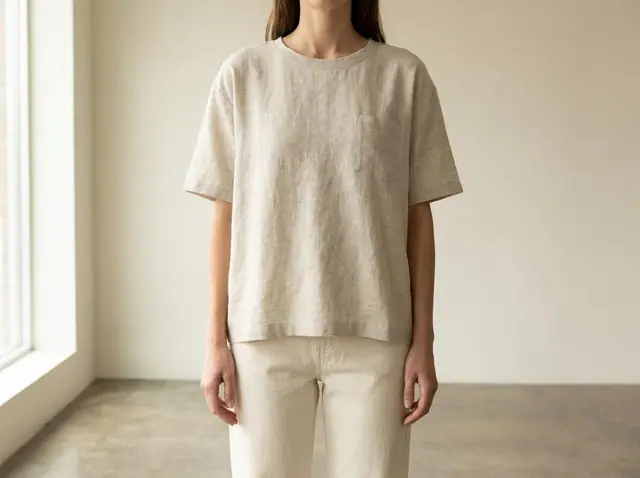
A piece marked "on fold" is drawn as half a shape. You place the straight edge on the folded edge of the fabric and cut. When you open the fabric, you get a full, symmetrical piece. The grainline still has to be parallel to the selvage, so the fold should sit along the lengthwise grain. The free Boxy Tee is a good example: its back, front and sleeve are all cut on the fold.
How do I find the grain when there is no selvage?
Cut-off remnants and pieces from a larger bolt may have no selvage. You can still find the grain.
- Pull a thread. Snip into the edge, catch one thread and tug gently. The thread bunches the fabric, leaving a line you can follow.
- Tear the fabric. Some woven cottons tear cleanly along the grain. A straight tear follows the thread line. Tearing can stretch or pucker silk, many synthetics and tightly woven or finished fabrics and does not work on knits.
- Pull test. Tug a small area lengthwise, crosswise and diagonally. The direction with the least stretch is the lengthwise grain. The diagonal stretches most, which is the bias.
How do I straighten off-grain fabric?
Fabric can come off the bolt with the threads slightly crooked, or lose shape in the wash. To bring it back, first square up the cut edge using a pulled thread or a tear. Then fold the fabric selvage to selvage and see whether the edges line up. If they do not, hold opposite corners and gently pull along the diagonal until the folded edges meet. Press with steam and let it cool before cutting. Pre-washing fabric before cutting also helps.
What about knit fabric and grain?
Knits have no threads running across like wovens, so the grain is read from the stitches. The ribs, called wales, run lengthwise. In most knits the greatest stretch goes around the body, so the stretchy direction of the fabric usually goes around the garment. The wales should hang straight down. Both sewing stretch fabric and sewing fleece cover what to expect. Note that the Boxy Tee is made for light to medium wovens and is not for knits.
What is nap and a directional print?
Some fabrics look different from one direction, such as velvet, corduroy or a print with an up-and-down design. For these, every piece must point the same way. Check the pattern, lay out all pieces with arrows facing one end of the fabric, and expect to need more fabric. Fabric choice is covered in best fabric for beginner sewing.
What happens if I cut off grain?
A piece cut off grain will hang and stretch in the wrong direction. Pant legs can twist around the leg. A hem may hang uneven, with one side dipping lower. Seams can ripple, and a garment may sag after washing. This is the main reason to take a minute over the layout.
When should I cut on the bias on purpose?
The bias is useful when you want stretch from a woven. It bends easily around curves, so bias tape is cut this way for necklines and armholes. It also gives fluid drape in skirts and dresses. See how to make bias tape for the method.
Where can I practice grainline?
These free Sewzy projects are simple places to practice the layout step.
- Boxy Tee: beginner, 90 minutes, with back, front and sleeve cut on the fold.
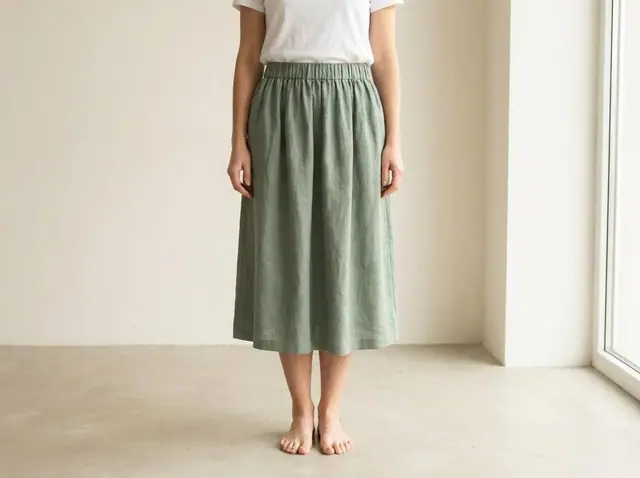
- Elastic-Waist Skirt: beginner, 90 minutes, built from one skirt panel.
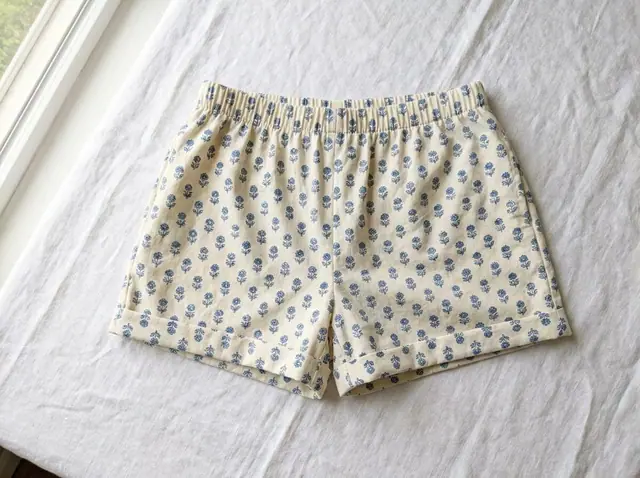
- Sleep Shorts: beginner, 60 minutes, built from one shorts piece.
- Barrel Pants: intermediate, 120 minutes, where wrong grain would show in the legs.
What are the common mistakes?
- Eyeballing the arrow. Measure at both ends instead.
- Ignoring the fold. A fold that is off the lengthwise grain moves the whole piece off grain.
- Cutting before checking the edge. A crooked cut edge hides crooked threads.
- Using a pulled edge on every fabric. Tear only wovens that tear cleanly.
- Forgetting nap. Pieces facing different ways show as different shades.
- Mixing up the bias with the crosswise grain. They are different directions.
 Kitchen sewing projects: 6 makes, ordered by time7 min read
 How to sew a jester collar: sizes, fabric and steps7 min read
 Hostess gifts to sew: 10 handmade ideas, ordered by time7 min read
 How to sew a tote bag with pockets: sizes, fabric, steps7 min read