Sewzy
Sewzy
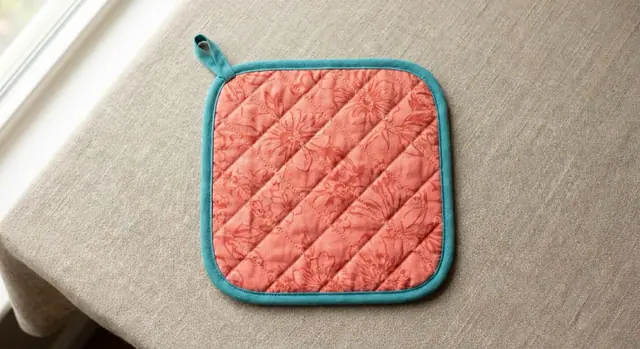
A potholder is a useful little project and a good one for learning quilting basics. It has few pieces, uses straight lines and gets used every day. This guide shows how to make a quilted potholder, and how to choose materials with safety in mind.
Choose the right materials
For a kitchen item, materials matter more than looks. Use:
- 100% cotton fabric for the outside and the lining.
- 100% cotton thread.
- Insulated, heat-resistant batting made for oven mitts and pot holders.
- Cotton batting as an extra layer.
Use only batting that is made for oven mitts and potholders. Ordinary craft batting is not intended for this and some synthetic fibres can melt. Read the packaging for the maker's instructions and follow them.
Pre-wash and press your cotton fabric so it will not shrink later. Note that very bright prints may bleed, so wash them separately the first time.
Cut your pieces
A potholder typically has two fabric squares, one layer of insulated batting and one layer of cotton batting. Cut each layer to the same size, and cut the fabric slightly larger if you plan to bind the edges. Follow the pattern for the exact size, which comes in small, medium and large in the Potholder pattern.
Make the quilt sandwich
- Lay the backing fabric face down.
- Add the cotton batting, then the heat-resistant batting.
- Place the top fabric face up.
- Smooth everything flat with your hands, working from the center outward.
- Pin or clip the layers every few inches, placing the pins away from where you plan to stitch.
Take your time with this stage. If the layers are not flat, the quilting will pucker.
Quilt it
Quilting holds the layers together so they do not shift while you are using the potholder. Draw lines with a washable marker, about an inch apart. Use a longer stitch length, around 3 mm, and sew slowly. Start in the middle and work out to the edges. Go over the thick areas carefully, and use a needle designed for thick layers if your machine struggles.
Diagonal lines look pretty and keep the layers firmly together. Always backstitch or knot the thread ends.
Trim and bind the edges
Trim the edges square. Then bind the potholder with bias tape or a strip of cotton fabric. Open the binding, align the raw edges and sew along the first fold. Fold the binding over the edge and stitch it down on the other side. Mitre the corners for a neat look. A hanging loop can be added at one corner before you bind.
The binding wraps all the raw edges, so no batting shows. It also makes the potholder stronger.
Using your potholder safely
This part matters. A handmade potholder is not guaranteed to be heat-proof, and it will never be as well tested as a factory product. Look it over before every use.
- Check it each time for thin spots, holes or damage.
- Do not use it if it is damp, because steam can burn quickly through wet fabric.
- Do not use it if it is scorched, stained with grease or worn through.
- Keep it away from open flame and hot burners.
- Replace it at the first sign of wear.
If you are not sure that it feels thick enough, add another layer, or do not use it for very hot dishes.
Care and washing
Machine wash gently and let it dry completely before using or storing. Greasy marks can be treated with a little dish soap before washing. A potholder that has been through many washes may become thin, so replace it when it begins to look tired.
Variations and next projects
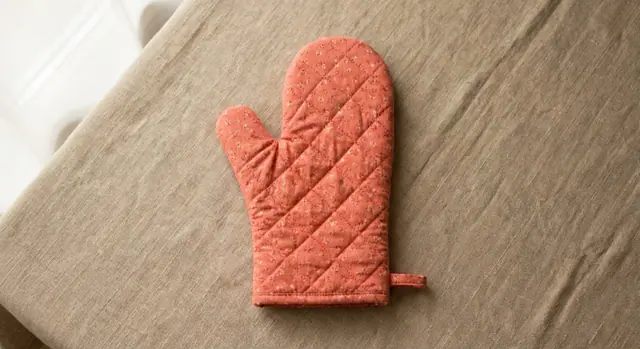
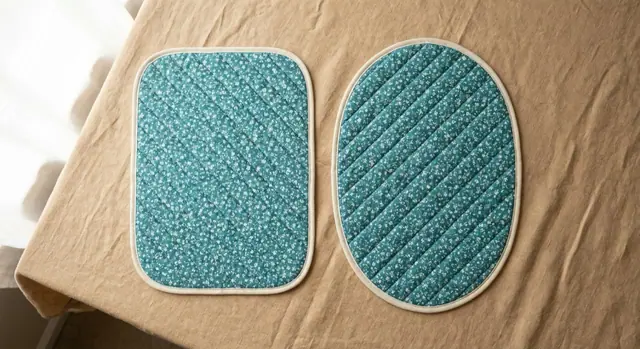
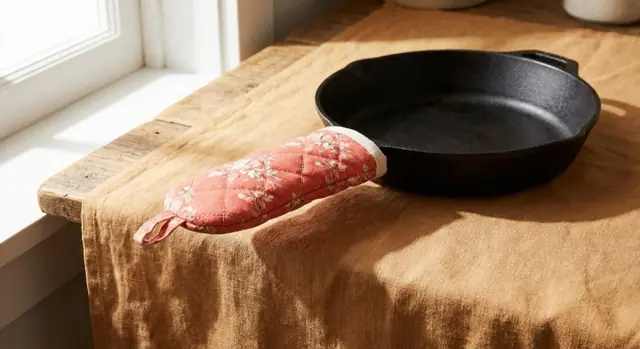
Once you can make a potholder, you can try other kitchen items. The Oven Mitt uses the same layering and the same safety rules. The Quilted Placemat uses quilting without the insulation, and the Pot Handle Cover and Bowl Cozy are other practical gifts. Always use batting made for the job, and check each item before use.
Make it with Sewzy
The Potholder pattern is one of the 13 free patterns in Sewzy. It comes in three sizes, with a written step-by-step guide for the quilting and the binding. Get Sewzy on the App Store and make a set for your kitchen.
FAQ
What batting should I use in a potholder?
Use only batting made for oven mitts and pot holders, which is insulated and heat-resistant, plus a layer of cotton batting. Do not use ordinary craft batting.
Is a handmade potholder heat-proof?
It cannot be guaranteed. Check it before every use, and do not use it if it is damp, scorched, worn or near open flame.
What fabric and thread are best?
100% cotton fabric and 100% cotton thread. Pre-wash and press the fabric before cutting.
How do I stop the layers from shifting?
Make a flat quilt sandwich, pin or clip it, and quilt lines about an inch apart, working from the center outward.
 What size sewing pattern do I need?6 min read
 How to find a sewing pattern from a photo5 min read
 Thanksgiving porch goose outfits: turkey, harvest and scarecrow looks to sew5 min read
 Handmade Christmas gifts to sew: 15 ideas by time and skill6 min read